

Home / Solutions / Automated Parking Guidance System
System 02 · APGS · Space guidance
Automated Parking Guidance System
An automated parking guidance system (APGS), also called a space guidance system, puts an indicator light over every bay. A driver entering the aisle reads the whole row at a glance and parks in the first green they see. It is the highest-resolution car parking guidance system available.
How an automated parking guidance system works
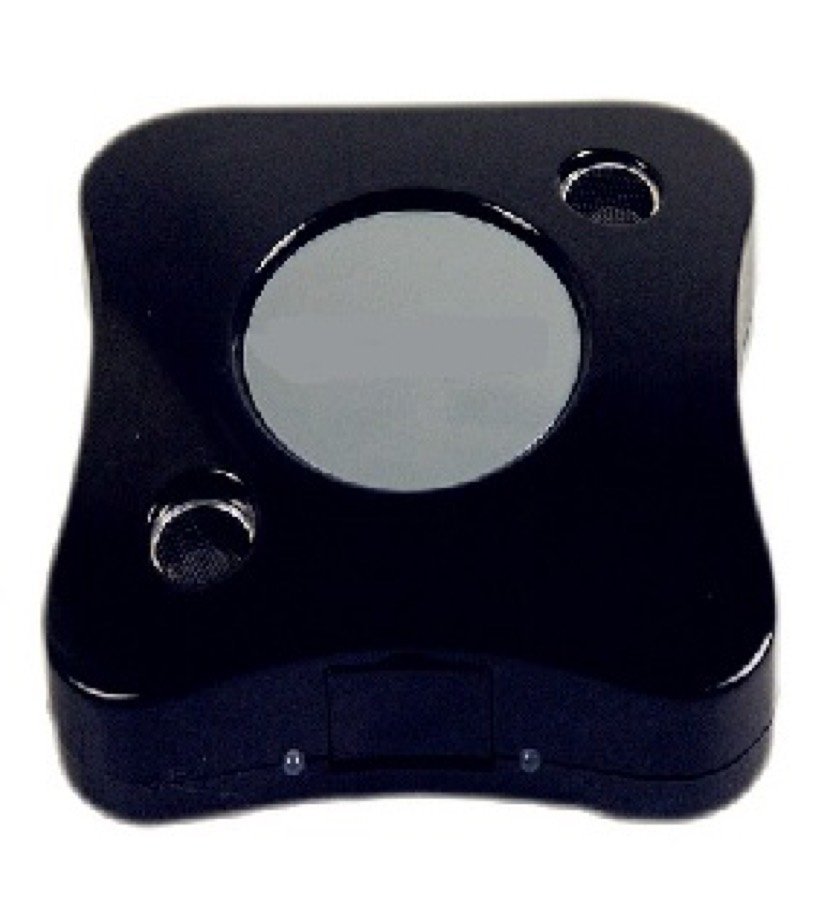
In an APGS, each bay gets a sensor — ultrasonic or camera-based — and an indicator head visible down the aisle. Bay states roll up to aisle signs, then level signs, then the garage entrance, so guidance is continuous from street to space.
- Green open · Red occupied · Blue accessible — configurable for EV and reserved
- Camera-based heads cover several bays at once and can read plates simultaneously
- Per-bay dwell data shows which spaces actually turn over
- Violation alerts when a non-permitted vehicle takes a reserved or accessible bay
Best for hospitals, airports, retail centers and mixed-use garages where peak-hour search time is the complaint — the places an automated parking guidance system pays for itself fastest.
Automated parking guidance system equipment
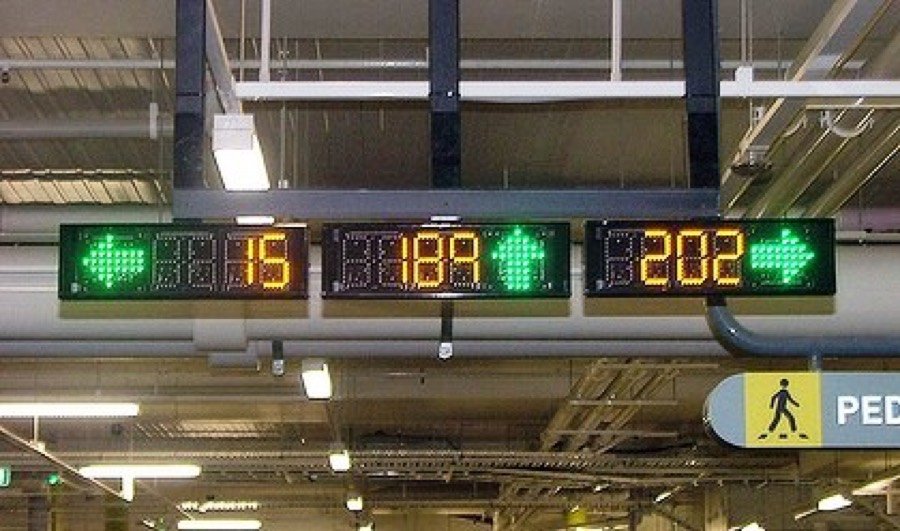
The hardware that makes an automated parking guidance system work: a sensor per bay, an aisle-visible indicator, and signage that rolls the counts up.
On site
Colgate Technology Campus: a wireless automated parking guidance install
The Colgate campus system shows what an automated parking guidance system looks like when the building will not tolerate visible infrastructure.
- Battery-powered wireless ultrasonic sensors above every space, so no power or data has to be run to the individual bay.
- No raceways down the drive lane. The usual conduit spine that gives these systems away is simply absent, which keeps the deck clean and cuts installation disruption.
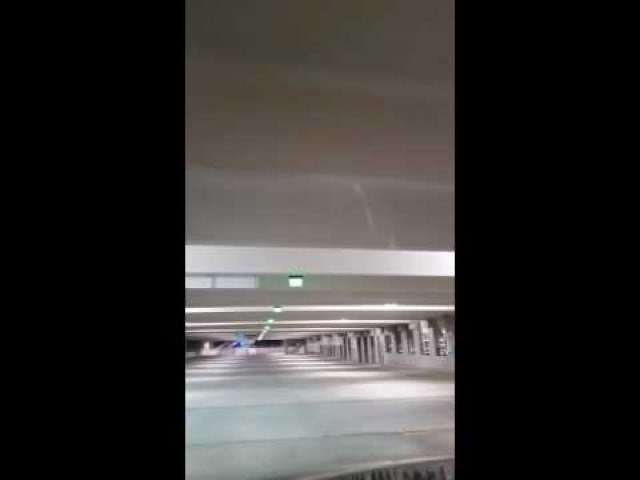
- LED indicators hung individually from the ceiling at every third pair of spaces — each light reporting the combined status of up to six bays, three on the left of the lane and three on the right.
That grouping is a deliberate trade. Instead of one lamp per bay, a driver reads a smaller number of lights further down the aisle and still knows whether that stretch of the row is worth entering. Fewer devices, fewer failure points, and a much lighter touch on a campus that did not want a garage full of hardware.
Colgate-Palmolive has run Kyosis guidance equipment since 2016.
Automated parking guidance system specification
- Sensor types
- Ultrasonic single-bay heads, or camera heads covering a group of bays.
- Indicator
- Multi-color LED, aisle-visible, mounted to deck or structure above the bay.
- Bay classes
- Standard, accessible, EV, reserved, compact — each with its own color and counting rule.
- Wayfinding
- Aisle and level signs fed from the same controller; no separate count system needed.
- Data
- Per-bay occupancy and dwell history, exportable for operations reporting.
- Enforcement
- Optional alerting on accessible and reserved bay misuse.
Automated parking guidance system (APGS): common questions
What is an automated parking guidance system?
An automated parking guidance system (APGS) uses a sensor over every parking space to detect whether it is occupied, and indicator lights and signs to direct drivers to an open space automatically. It is also called a space guidance system, a parking space guidance system, a car parking guidance system or a smart parking guidance system — all names for the same system.
How is an automated parking guidance system different from level guidance?
They are different systems. A level guidance system is the simpler option: it counts vehicles in and out of each floor and tells drivers which level has room. An automated parking guidance system detects every individual bay and shows drivers exactly which space is open. Kyosis recommends one, the other, or a mix based on each client’s garage, budget and preferences.
What does an automated parking guidance system include?
A sensor per bay (ultrasonic, or camera heads covering a group of bays), an aisle-visible LED indicator, aisle and level count signs, entrance signage, and a controller that rolls bay states up to every sign and records occupancy and dwell data.
Can an automated parking guidance system be added to an existing garage?
Yes. Retrofits are routine and mostly depend on cable pathway. Wireless battery-powered sensors, like the ones at the Colgate Technology Campus, and camera heads that cover several bays both reduce the conduit a retrofit needs.